

How to play Dungeons & Dragons online with Roll20
How to play Dungeons & Dragons online with Roll20
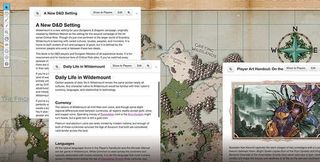
Playing Dungeons & Dragons online tin exist a challenge, just Roll20 is a tool that tin assistance make digital adventures feel seamless. Since many of us are stuck at home right now and craving a scrap of social contact, tabletop RPGs are arguably only the pastime we need.
Not only do you get to escape into a fantastical world and solve someone else's bug for a while, merely you get to practice and then with your friends. If you've been playing D&D or a like RPG in real life, now is the fourth dimension to take it online — and if you haven't been playing, now is the perfect time to start your own campaign.
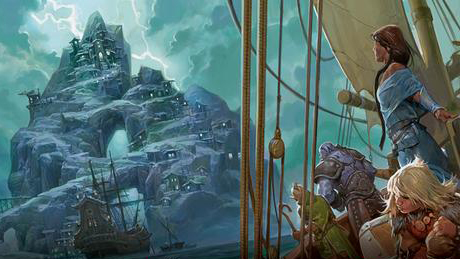
The only trouble with playing Dungeons & Dragons online is that the game is definitely designed with a physical tabletop in listen, with real people gathered around it to roll dice, move miniatures and collaborate on outlandish plans. This is where Roll20 comes in. This free plan provides everything you need to run D&D — or well-nigh any other tabletop RPG — correct from your computer. You can build maps, customize character tokens, roll digital dice and even incorporate extras like music and individual notes.
Roll20 tin be a little abstruse, particularly if yous're new to playing RPGs online. As a role player in one Roll20 game and a Game Main in some other ane, I've compiled a few tips to help new players get up and running with this powerful tool.
One important note: While Roll20 is optimized for Dungeons & Dragons Fifth Edition, information technology'south technically a system-neutral tool. You can run but nigh annihilation in it — some games have even their entire rule sets to Roll20. We'll talk more about that afterwards, only the lesser line is that D&D is just one possibility amidst many.
Getting started in Roll20
I'd say that the first thing you demand for Roll20 is a group of friends who desire to play an RPG with yous — but that'south not strictly true. Roll20 offers a whole host of options for seeking players, joining groups and even hunting down Game Masters. Whether y'all're a total newbie, an experienced dungeon delver or even a professional GM looking to get paid, yous can put yourself out there and notice a game to arrange your tastes.
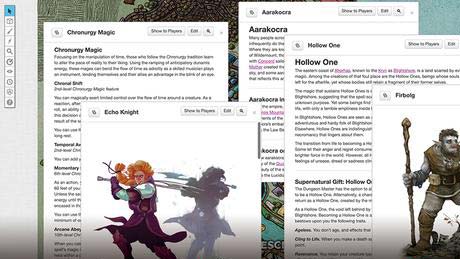
Let's accept a step back, though, and assume that you've never tried a tabletop RPG before. Every bit discussed above, now is a nifty time to become involved, especially since they provide both entertainment and social interaction at a time when both are sorely needed.
Briefly, a tabletop role-playing game (RPG) is sort of the halfway point between a board game and an improvisational theater group. You lot and three to five of your friends pick a game — for example, Dungeons & Dragons. Yous create a character who inhabits this fantasy world, such as a clever human magician, a brave dwarven fighter or a cunning elven ranger. One of your friends acts as the Dungeon Chief or Game Master (DM or GM), who guides the rest of the players through a story. You roll die to resolve any encounter that's in doubt, whether it's fighting off a horde of goblins, or talking your way past a recalcitrant boondocks guard. The GM can buy licensed adventures from the RPG'due south publisher, or create his or her ain.
If it sounds complicated, try watching a session online, or playing in one yourself; you lot'll "become" how information technology works inside a few minutes. It's basically a game of make-believe, but with rules and continuity.
In any case, if yous don't have a group, you can use Roll20's Join a Game feature. If you practice, you can dive right in and create an account. It's a pretty standard username/password/profile setup.
Roll20 tutorial and basics
Whether y'all're a GM or a player, yous'll still need to understand Roll20'south basic controls. Substantially, the program is a digital mapmaking tool, which lets you lot design areas on a grid, and then movement role player "tokens" effectually them. If you just need to keep rails of player location and combat altitude, yous could get past with a bunch of colored dots on characterless gray tiles. (I am non knocking this idea, incidentally; it saves a lot of work, and players are going to conjure up something elaborate in their imaginations, anyway.) You could likewise go artistic and deck out a map with gorgeous custom artwork, elaborate character models and circuitous level designs. Either way, the principles are the same.
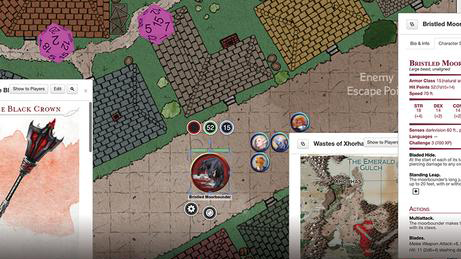
While I tin't explain every feature of Roll20 (partially because there are a lot of features, and I haven't explored them all yet), the built-in tutorial is a great place to start. The tutorial walks you through creating a map, adding grapheme tokens, curlicue dice, program macros, add music to your game and so forth. Players don't really need to go through the whole thing, only GMs should, particularly since function of the tutorial covers revealing parts of the map to players over time. (If players can meet the whole map from scratch, it patently spoils a lot of the surprises they'd observe while exploring.)
Roll20 is a complicated program, and learning it requires a lot of trial and error, fifty-fifty with the long, complex tutorial. Equally such, some additional resources I've found useful are the Roll twenty Crash Form, every bit well as walkthrough videos from the Roll20 team. These include an overview of the toolkit, a brief video on designing maps, and a long, comprehensive walkthrough of the entire Roll20 system.
To give you the bare-bones version of what you'll demand to larn: Use the draw tool to design maps. Import assets into your art library for level features and grapheme tokens. Move characters around the map. Program dice rolls for each graphic symbol, unless you programme to roll in real life (and you trust your players to do so). Reveal the map as players encounter new territory. If you can practice all of these, you're at to the lowest degree 80% of the way there.
Furthermore, Roll20 has built-in vocalization and video chat. I've never institute video chat necessary, and information technology can eat up a lot of bandwidth. Vox chat works well plenty, although my groups all the same prefer to use Discord instead. If you lot find you don't want the Roll20 phonation chat, information technology's easy plenty to mute.
When to use Roll20 — and when not to
Having spent a fair amount of time in Roll20 over the past few weeks, I've found that it tin can enhance a tabletop RPG —only it can as well drag the feel down. Simply as yous wouldn't necessarily make a battle map and make your players measure out their movement speed for every encounter in a game, you don't need to play out an unabridged session in Roll20. (You tin can, but it'south exhausting for both the players and the GM.)
First off, you should utilise Roll20 for combat encounters. Positioning, environmental obstacles, move speed and weapon ranges are all vital, and information technology's extremely hard to keep track of all this in your head. (This is particularly true since your conception of the battlefield may be quite different than another histrion's.) If you suspect your players are going to go into gainsay in a certain area, you lot should design that surface area and populate it with the necessary foes. Fifty-fifty if they somehow featherbed it, it's ameliorate to be prepared.
On the other hand, you more often than not don't demand Roll20 for simple social encounters. If your political party is wandering through a boondocks, stopping in taverns and talking with a few characters at a time, Roll20 is not really going to add together annihilation to the experience. You can design every tavern, store and castle if you lot're really into mapmaking, but functionally, there'south no purpose. Information technology's a lot easier on both yous and your players if you stick to "theater of the mind" for most noncombat encounters. The same is truthful of traveling from place to place; it'south plenty to say "you motility through a woods" rather than making players drag their tokens beyond a mass of trees.
Of course, there are some marginal cases, such equally scenes that involve extended skill checks, or social settings where positioning is extremely important. (Call back about a chase through a crowded city for the former, or a fancy nobleman'southward gala for the latter. These are just examples; they could be anything.) More often than not speaking, if yous call up that you might demand to roll dice to determine altitude and motion, a Roll20 map — fifty-fifty a very elementary i — could be a huge boon. The maps are not easy to design on the wing, and then attempt to have one ready in advance.
Beyond that, a lot of Roll20 is trial and mistake, so go ahead and experiment with features similar graphic symbol sheets, system compendiums, mobile apps and licensed, purchasable content. Nix is going to supercede getting together with a bunch of friends to run a game in-person, but nether the right conditions, Roll20 can come shut.

Source: https://www.tomsguide.com/news/dungeons-and-dragons-online-roll-20
Posted by: howellbeir1960.blogspot.com
0 Response to "How to play Dungeons & Dragons online with Roll20"
Post a Comment